
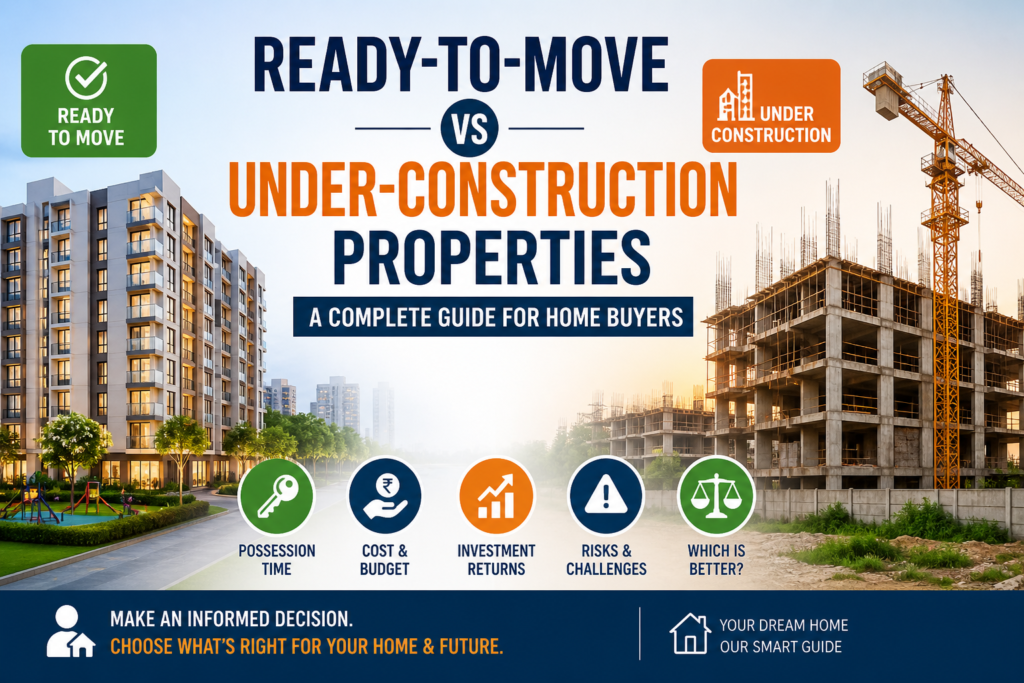
Buying a home is one of the biggest financial decisions in life. Whether you’re a first-time buyer or an experienced investor, choosing between Ready-to-Move vs Under-Construction Properties can significantly impact your finances, lifestyle, and future returns.
In India’s rapidly evolving real estate market, both options come with their own set of advantages and challenges. Some buyers prefer the immediate possession of ready homes, while others lean toward the affordability and appreciation potential of under-construction properties.
This detailed guide will help you understand every aspect of Ready-to-Move vs Under-Construction Properties, so you can make a confident and informed decision.
🏠 What Are Ready-to-Move Properties?
Ready-to-move properties are homes that are fully constructed and available for immediate possession. You can inspect the property, complete paperwork, and shift in almost instantly.
These properties are ideal for buyers who want certainty and don’t want to wait.
✅ Advantages of Ready-to-Move vs Under-Construction Properties
1. Immediate Possession
One of the biggest advantages of ready-to-move homes is that you can move in right after purchase. There is no waiting period or construction delay.
2. No Construction Risk
Unlike under-construction properties, there’s no uncertainty regarding completion timelines.
3. What You See Is What You Get
You can physically inspect the property, check quality, amenities, and surroundings before buying.
4. No GST
Ready-to-move homes (with completion certificate) are exempt from GST, making them more cost-effective in some cases.
5. Rental Income Opportunity
You can start earning rental income immediately after purchase.
❌ Disadvantages of Ready-to-Move vs Under-Construction Properties
1. Higher Cost
Ready homes are generally more expensive than under-construction properties.
2. Limited Choices
You may have fewer customization options compared to projects still under construction.
3. Older Infrastructure
In some cases, ready homes may not have the latest designs or smart features.
🏗️ What Are Under-Construction Properties?
Under-construction properties are those that are still being built and will be delivered in the future.
These are often preferred by investors and budget-conscious buyers.
✅ Advantages of Ready-to-Move vs Under-Construction Properties
1. Lower Price
Under-construction properties are usually priced lower than ready-to-move homes.
2. Flexible Payment Plans
Builders offer construction-linked plans, reducing financial burden.
3. Higher Appreciation Potential
Property value often increases by the time construction is completed.
4. Customization Options
Buyers may get the option to choose layouts, interiors, or finishes.
5. New-Age Amenities
Modern projects often include smart homes, green spaces, and advanced security systems.
❌ Disadvantages of Ready-to-Move vs Under-Construction Properties
1. Project Delays
Delays are common and can extend possession timelines significantly.
2. GST Applicable
You need to pay GST on under-construction properties.
3. Uncertainty
There is always a risk related to builder credibility and project completion.
4. Double Financial Burden
You may have to pay rent along with EMIs during construction.
⚖️ Ready-to-Move vs Under-Construction Properties: Key Differences
| Factor | Ready-to-Move | Under-Construction |
|---|---|---|
| Possession | Immediate | Future |
| Price | Higher | Lower |
| Risk | Low | Medium to High |
| GST | Not applicable | Applicable |
| Customization | Limited | Available |
| Investment Return | Stable | Potentially High |
💰 Cost Comparison: Ready-to-Move vs Under-Construction Properties
When comparing Ready-to-Move vs Under-Construction Properties, cost is a crucial factor.
Ready-to-Move Costs:
- Higher base price
- No GST
- Immediate maintenance charges
Under-Construction Costs:
- Lower base price
- GST applicable
- Hidden costs (delays, rent + EMI)
📊 Investment Perspective
From an investment standpoint, Ready-to-Move vs Under-Construction Properties serve different purposes.
Ready-to-Move:
- Ideal for rental income
- Low risk
- Stable returns
Under-Construction:
- Better for long-term gains
- Higher appreciation potential
- Suitable for investors
🛡️ Legal Aspects (RERA Importance)
The introduction of RERA (Real Estate Regulatory Authority) has significantly improved transparency.
For Under-Construction Properties:
- Check RERA registration
- Verify builder track record
- Review project deadlines
For Ready-to-Move Properties:
- Ensure completion certificate
- Check occupancy certificate
- Verify ownership documents
📍 Which Option is Better for You?
Choosing between Ready-to-Move vs Under-Construction Properties depends on your needs.
👨👩👧 For End-Users
If you want immediate living space → Ready-to-Move is better
💼 For Investors
If you want higher returns → Under-Construction is better
💸 For Budget Buyers
If affordability matters → Under-Construction is ideal
⚡ For Risk-Averse Buyers
If you want security → Ready-to-Move is safer
📈 Market Trends in India (2026)
The Indian real estate market is evolving rapidly:
- Increased demand for ready-to-move homes post-pandemic
- Growth in affordable housing projects
- Rising interest in Tier-2 cities
- Smart homes gaining popularity
These trends influence the decision between Ready-to-Move vs Under-Construction Properties.
🧠 Expert Tips for Home Buyers
1. Always Verify Builder Reputation
Research past projects before investing.
2. Check Legal Documents
Avoid future disputes by ensuring all paperwork is clear.
3. Calculate Total Cost
Include hidden charges and taxes.
4. Think Long-Term
Choose based on future needs, not just current affordability.
5. Visit the Site
Physical inspection is crucial for both property types.
🚨 Common Mistakes to Avoid
- Ignoring RERA registration
- Not checking loan eligibility
- Overlooking location advantages
- Choosing price over quality
- Not planning finances properly
🏁 Final Verdict: Ready-to-Move vs Under-Construction Properties
There is no one-size-fits-all answer when it comes to Ready-to-Move vs Under-Construction Properties.
- If you want instant possession and low risk, go for ready-to-move homes.
- If you want affordability and higher returns, choose under-construction properties.
The right choice depends on your financial situation, risk appetite, and long-term goals.
📌 Conclusion
Understanding the difference between Ready-to-Move vs Under-Construction Properties is essential before making a property investment. Both options have unique benefits and risks.
Take your time, do proper research, and align your decision with your financial goals and lifestyle needs.
A well-informed decision today can lead to a secure and profitable future tomorrow.
if you have any question please contact us